Gaming as a New Parent: What Changes and What Works
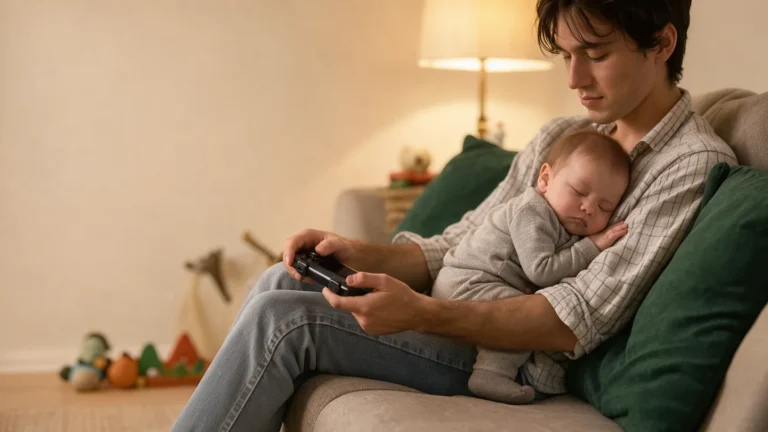
You bought a game last month. You have played eleven minutes of it. The baby monitor is on the nightstand, the dishwasher needs unloading, and you are too tired to remember what you were doing in the game. This is what gaming as a new parent actually looks like, and it is not a failure. It is a season.
The first year reshapes your relationship with games more than any hardware upgrade ever will. Your sessions get shorter, your windows get unpredictable, and the games that used to absorb you for six hours straight may feel impossible to open. The good news: plenty of games still work, and a few small changes to how you play make the difference between a hobby that fades and one that quietly survives.
This guide walks through what really changes, which platforms and game types hold up, and how to keep playing without feeling like you are stealing time from your kid.
What matters most in the first year
- Your total play time drops, but your ability to use small windows matters more than ever.
- Handhelds and suspend features are the single biggest quality-of-life change for new parents.
- Games that save anywhere and pause instantly survive. Games with long checkpoint gaps or mandatory online play do not.
- You do not need to finish every game you start. Playing for twenty minutes and stopping is a complete session.
- The first year is a season, not a permanent state. Your habits will shift again as your child grows.
The honest math
How your play time actually changes
Before the baby, you might have had two or three evenings a week with a free hour or two. After the baby, those blocks vanish. What replaces them is a patchwork of small windows: twenty minutes after the baby falls asleep, fifteen minutes during a nap, a quiet half hour while your partner handles the evening routine.
The total hours are lower, but the real challenge is fragmentation. A game that demands you settle in for ninety minutes before anything meaningful happens will sit unplayed for months. A game that lets you do something satisfying in fifteen minutes gets played every night.
This is not a motivation problem. It is a logistics problem, and logistics have solutions.

Which platforms survive the first year
The platform question matters more than most people expect. If your only gaming setup is a living room console connected to the TV, you are competing with the whole family for screen time and a shared space. If your setup is a handheld you can pick up from the couch after the kids are in bed, you have a private, portable option that fits the rhythm of a new household.
Here is how the main platforms compare when you are a new parent:
| Platform | Suspend and resume | Portability | Best fit for new parents |
|---|---|---|---|
| Nintendo Switch 2 | Instant suspend, resume in seconds | Fully portable, play in bed or on the couch | Excellent for short, frequent sessions |
| Steam Deck | Suspend works well, resume in seconds | Portable but heavier, needs a power source for long sessions | Great for PC library access in small windows |
| PlayStation 5 | Rest mode works but resume can be slow, not portable | Tethered to the TV or a monitor | Works if you have a dedicated evening window |
| Xbox Series X/S | Quick Resume is fast but has limits with some games | Tethered to the TV | Good for short sessions if Quick Resume works for your game |
| PC (desktop) | Depends entirely on the game, no system-level suspend | Not portable | Only practical if you have a guaranteed quiet block |

What game types work and what does not
The single most important question when you are choosing a game as a new parent is this: can I stop at any moment without losing progress or getting punished?
Games that save anywhere or autosave frequently are your best friends. You can pause mid-level, walk away to handle a crying child, and come back to exactly where you left off. Games that only save at distant checkpoints are a trap. You sit down for a twenty-minute window, get interrupted at minute twelve, and lose fifteen minutes of progress. You will stop opening that game.
Online games are a separate category. You cannot pause them. If you are mid-match and the baby wakes up, you either abandon the match (which may cost you rank or anger teammates) or you ignore the baby. Neither is acceptable. Skip online multiplayer during the first year. There will be time for it later.
For a deeper look at how saving works across different games, see save anywhere vs checkpoints.
Session length
Match the game to the window you actually have
A useful habit is to sort your game library by the time each session realistically takes. Not the total length of the game, but the length of one meaningful chunk.
If your typical window is fifteen to twenty minutes, look for games where a single run, level, or encounter fits that window. Roguelikes with short runs, puzzle games, and story games with frequent autosaves all work here.
If you have a thirty to sixty minute window a few times a week, you can handle games with longer levels or chapters, as long as they save at the end of each one.
If you occasionally get a full evening, that is when you can open a longer narrative game or a game with bigger chapters. Just make sure it saves at the chapter break, not only at the start.
The gaming with little time guide covers this in more detail with specific game recommendations by time window.
Mindset
How to keep the hobby without guilt
The guilt is real, and it is worth naming. You sit down to play and a voice says you should be doing something else. You feel like you are stealing time from your child or your partner.
Here is the reframe: a parent who has a hobby they enjoy is a better parent than one who resents every free minute. Twenty minutes of a game you love is not theft. It is maintenance. It keeps you sane, and a sane parent is a present parent.
Practical tips that help:
Tell your partner you are playing for a set window. "I am going to play for thirty minutes after the baby is down." This removes the ambiguity that feeds guilt. It also gives your partner a clear expectation, which helps them plan their own break.
Do not set completion goals during the first year. You do not need to beat every game you start. Playing a game for three sessions and setting it aside is fine. You will come back to it, or you will not. Neither outcome is a failure.
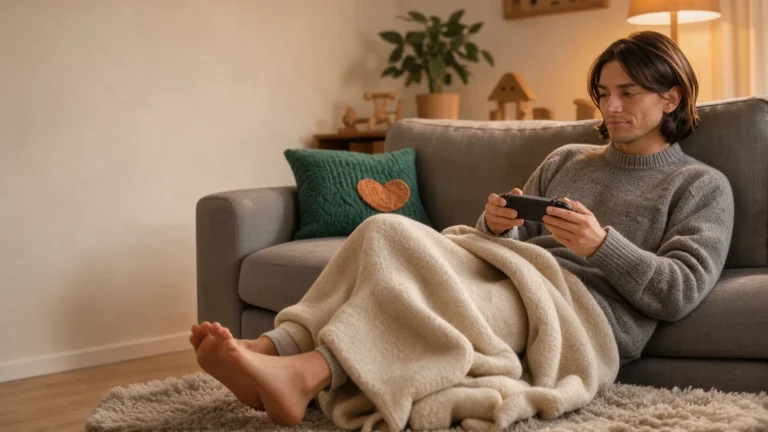
Lower the friction to start. Keep the handheld charged and within arm's reach. If you have to dig it out of a drawer, find a controller, and wait for an update, you will not play. If it is on the nightstand and boots in three seconds, you will.
What to avoid
Games and habits that fight against new-parent life
Some things will quietly kill your gaming habit if you let them in.
Long unskippable cutscenes are a problem. If a game forces you to watch five minutes of story before you can save, and the baby wakes up during that cutscene, you have lost the whole session. You will avoid that game.
Games with no pause option are a non-starter. If you cannot stop the game the instant you are needed, you will stop playing it. Period.
Games that punish you for stopping mid-session (timer-based levels, permadeath runs that are too long, online matches you cannot leave) create a conflict between your game and your child. Your child wins every time, and the game loses your interest.
If you are wondering whether a specific game can be paused, check the pause and save details before you buy. That is exactly what pause and save guides are for.
Questions new parents ask about gaming
How much time will I actually have to play in the first year?
It varies enormously by household, but most new parents report that their reliable gaming windows are between fifteen and forty-five minutes, a few times a week. Some weeks you get nothing. Some weeks you get a full evening. Plan for the small windows and treat the big ones as a bonus.
Should I buy a handheld or stick with my console?
If you do not already own a handheld, a Nintendo Switch 2 or Steam Deck is the single best purchase for a new parent. The ability to suspend instantly and play from the couch or bed without claiming the living room TV changes everything. If you already have a console and no handheld, use the console's rest or suspend mode and accept that your windows will be shorter and less frequent.
Is it okay to play the same game for months without finishing it?
Yes. A game you play for twenty minutes three times a week for four months is a game you are enjoying. Completion is not the point. The point is that you had four months of small, enjoyable sessions.
What if my partner thinks I play too much?
Talk about it directly. Show them the math: "I played forty minutes this week." That is less time than most people spend scrolling their phone. If they still have a concern, it is usually not about the minutes but about whether you are present when you are with the family. Be present when you are with the family, and the gaming time is easier to defend.
Will I get my gaming life back?
Yes. The first year is the hardest. By the second year, naps become more predictable, and by the third year, you may have evenings again. The hobby does not disappear. It just changes shape for a while.
Are there games specifically designed for short sessions?
Not designed for parents specifically, but many games happen to fit short sessions well. Roguelikes with fifteen to twenty minute runs, puzzle games, and story games with frequent autosaves are the most common categories. The key is not the genre but whether the game lets you stop cleanly at any point.