
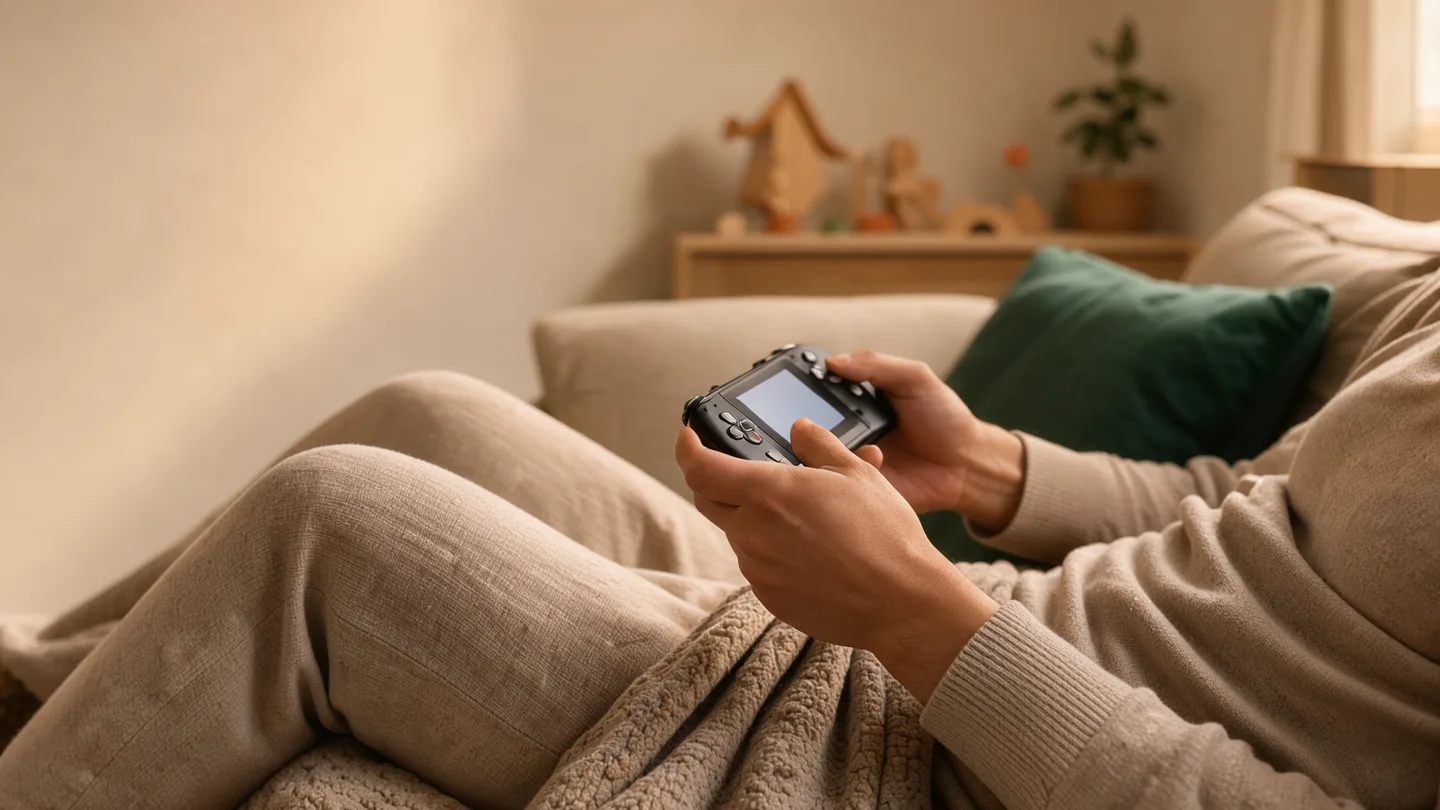
Gaming With Little Time: The Complete Guide
You have forty-five minutes tonight. Maybe it is thirty. Maybe the baby just woke up and it is zero. Either way, you want to play something, and you do not want to lose progress or get stuck in a situation you cannot walk away from.
This guide is about the three questions that decide whether a game fits a busy life: can you pause it, does it save anywhere, and how long until the next safe stop. Answer those three before you buy, and you will spend less time frustrated and more time actually playing.
Everything on Pausable Games is built around those answers. Every game page starts with them, and every recommendation is grouped by the time you actually have.
What matters most when you only have an hour
- A game that pauses at any moment is worth more than a game with great graphics and a ten-minute checkpoint gap.
- Save-anywhere means you can walk away mid-level without losing progress. Checkpoint-only saves mean you might lose twenty minutes of work if dinner calls.
- Typical session length tells you whether a game respects your time or demands a block you do not have.
- Online games often cannot be paused. Know this before you start a match at 9:45 PM.
- The best game for a busy adult is not the best game overall. It is the one that fits the window you actually get.
The Three Questions That Decide If a Game Fits Your Life
Before you buy anything, ask three things. Can I pause it right now? Does it save where I am standing, or only at a checkpoint? How long until the next safe stop?
These sound simple. They are not always simple in practice. A game might have a pause button that only works in the menu, not during combat. A game might save automatically, but only every five minutes, so you lose your last four minutes of progress. A game might have a checkpoint every thirty seconds, or it might have one every twenty minutes.
The difference between a game that works for you and one that does not usually comes down to these three answers. Not the story, not the graphics, not the review score. Pause, save, session length.
The three factors, explained
Can you pause it right now?
A true pause means you press a button and the game stops. No timer keeps running, no enemies keep moving, no match keeps going. This is what you need when a kid calls from the other room or the doorbell rings.
Some games have a pause button that only works outside of combat or cutscenes. Others pause but keep a timer running, which matters in timed challenges. Online games almost never pause at all. If you are playing a multiplayer match, you are committed until it ends.
For a busy parent, a true pause is the single most important feature. It is the difference between playing tonight and not playing at all.
Does it save where you are standing?
Save-anywhere means you can quit at any moment and pick up exactly where you left off. This is ideal. You play for twelve minutes, quit, and nothing is lost.
Checkpoint saves are the middle ground. The game saves at set points, usually after a boss or at the start of a level. If you quit between checkpoints, you go back to the last one. That might cost you five minutes or twenty-five.
Manual saves let you choose when to save, but you have to remember to do it. Auto-save intervals matter too. A game that auto-saves every thirty seconds is very different from one that auto-saves every ten minutes.
How long until the next safe stop?
Session length is not about how long the whole game is. It is about how long you have to play before you reach a natural stopping point. A game with a twenty-minute story chapter and a save at the end of it gives you a clean twenty-minute session.
Some games have long stretches between safe stops. A boss fight that takes fifteen minutes, followed by a cutscene you cannot skip, followed by another fifteen minutes of gameplay before the next checkpoint. That is a forty-five-minute commitment you did not plan for.
When you only have thirty minutes, you want a game where the next safe stop is within that window. That is what we mean by session length.

How to Pick a Game That Fits Tonight
Start with the time you actually have, not the time you wish you had. If you get twenty minutes after the kids are in bed, look for games with short sessions and save-anywhere. If you have a full Saturday afternoon, you can afford a longer session and a checkpoint-based save system.
The blog on this site groups recommendations by the time you have: fifteen minutes, thirty to sixty minutes, one evening, or one weekend. That grouping is the fastest way to find a game that matches your window.
A few rules of thumb that hold up across genres. Roguelikes and action games often have short runs, which is good for a quick session, but they may punish you for quitting mid-run. Story games often have long chapters with no safe stop in the middle. Strategy games can be paused, but a single turn might take longer than you expect.
If a game page on this site says "not a good fit for short sessions," believe it. We say that when the checkpoint gaps are long, the cutscenes are unskippable, or the pause does not work when you need it. We also suggest a better alternative in the same genre, so you are not left empty-handed.
Quick setup
How to set up your platform for short sessions
Turn on cloud saves if your platform supports them
Cloud saves mean your progress syncs across devices. If you start on the couch and finish on the handheld in bed, you pick up where you left off. On Switch, this requires a Nintendo Switch Online subscription. On Steam, it is free and usually automatic. On PlayStation, it requires PS Plus.
Check the pause behavior before you commit to a long session
Open the game, start a level, and press pause. See what happens. Does it stop everything, or does it only open a menu? Does the timer keep running? This takes thirty seconds and saves you a frustrating evening.
Set a hard stop time and save before it arrives
If you have thirty minutes, set a timer for twenty-five. Save, quit, and walk away. This habit protects your progress and keeps gaming from eating the sleep you need for tomorrow.
Keep a short list of known-good games
Not every night is a research night. Keep a small list of games you already know pause well, save anywhere, and have short sessions. When you have twenty minutes and no energy to browse, you pick from that list and play.

What to Avoid When You Only Have an Hour
Online multiplayer games are the most common trap. You cannot pause a match. If you start a ranked game at 9:45 PM and it runs twenty minutes, you are in it until it ends, even if the house is on fire. If you need flexibility, stick to single-player or co-op games that let you leave without penalty.
Games with long unskippable cutscenes are the second trap. You sit down for a quick session and get locked into a six-minute cinematic you cannot skip. That is six minutes you did not plan for, and it happens at the worst moments, right when you need to stop.
Games with punishing checkpoint gaps are the third trap. You die, lose twenty minutes of progress, and have to replay a section you already cleared. That is not a difficulty problem. It is a time problem, and it makes short sessions feel pointless.
None of these games are bad. They are just bad fits for a specific kind of evening. The honest answer is that some great games are not great for busy adults, and that is okay. You are allowed to play something else tonight.
Questions busy gamers ask before they buy
Can I pause any single-player game?
Most single-player games have a pause button, but not all of them pause everything. Some pause the world but keep a timer running. Some only pause outside of combat. Some have no pause at all during cutscenes. Always check the pause behavior before you commit to a long session.
What does "save anywhere" actually mean?
It means you can quit the game at any moment and resume exactly where you left off. No lost progress, no going back to a checkpoint. This is the gold standard for busy players. Not every game offers it, and some games that claim to save often still have gaps.
Are handheld games better for short sessions?
Often, yes. Handhelds are easier to pick up and put down. You can play in bed after the kids are asleep without setting up a TV. But the game itself matters more than the hardware. A long-session game on a handheld is still a long-session game.
How do I know if a game is realistic to finish?
Look at the time-to-finish estimate on the game page. A game that takes eight to twelve hours is realistic over a few weeks of short sessions. A game that takes sixty hours is not, unless you have a stretch of free time coming. We list time-to-finish on every game page so you can plan.
What if I only have fifteen minutes?
Fifteen minutes is enough for a puzzle game, a short roguelike run, a few rounds of a card game, or a chapter of a story game with short chapters. The key is that the game has a safe stop within that window. We group recommendations by time on the [home page](home) so you can filter by what you have.
Find a game that fits tonight
Every game page on Pausable Games starts with pause, save and session length answers. Browse by the time you have and pick something you can actually finish.