How to Find Time to Game as a Busy Adult
You want to game. You also want to be present for your kids, your partner and your own sleep. The good news is that these two things are not as incompatible as they feel at 11 p.m. when you are scrolling a store page and telling yourself you will start tomorrow.
The trick is not finding a big block of free time. That block does not exist for most of us. The trick is building a system around the small windows you already have, choosing games that respect those windows, and being honest with the people who share your life about what you need.
This is not about squeezing in one more hour. It is about making the time you do have actually work for you.
Key takeaways
- A 15-minute window is enough to make real progress in the right game, and that progress adds up faster than you expect.
- A handheld with suspend and resume turns dead moments into play time without a setup ritual.
- Picking a genre that fits your schedule matters more than picking a specific game.
- A short, honest conversation with your partner about gaming time prevents more resentment than any productivity hack.
- Stealing sleep to game is the one strategy that reliably backfires.
The 15-Minute Window Is Real
Most advice about finding time to game assumes you can carve out an evening. You cannot. What you can do is notice the gaps that already exist. The 15 minutes after the kids are in bed but before you are too tired to focus. The 20 minutes on a commute. The 10 minutes while dinner is in the oven.
These windows are not wasted time. A 15-minute session in a game that saves anywhere and pauses instantly can clear a level, finish a puzzle or advance a story beat. Do that four nights a week and you have made more progress than someone who waits for a Saturday afternoon that never comes.
The key is choosing games that match the window. A game that needs 45 minutes to get into a flow state will frustrate you in 15. A game that lets you jump in, do one thing and walk away will feel like a gift. That is why gaming with little time exists as a guide: it sorts games by the time they actually demand, not by how long they claim to be.
Different Schedules, Different Windows
The bedtime window
Your best window is the 30 to 60 minutes after the last child is asleep. It is unpredictable because bedtime slips, a kid wakes up, or you are too wiped to start. The fix is a game that saves anywhere and pauses at any moment, so you can stop mid-sentence when a small voice calls from the hallway. A handheld is ideal here because you can play in bed without a TV or a desk.
The off-hours gap
Your free time does not line up with anyone else's, which means you cannot rely on a shared evening. The upside is that you often have a solid block of 60 to 90 minutes when the house is quiet. The downside is that you are tired in a way that makes complex games feel like homework. Short, low-stakes sessions work best: a run in a roguelike, a few rounds of a card game, a chapter in a visual novel.
The transit block
A 20 to 40 minute commute each way is a real gaming window if you have a handheld and a game that does not need a stable connection. The challenge is that you are standing, jostled or in a public space, so games that need precise inputs or long unbroken focus will not work. Turn-based games, puzzle games and short narrative sessions fit well here.
Handhelds Change the Math
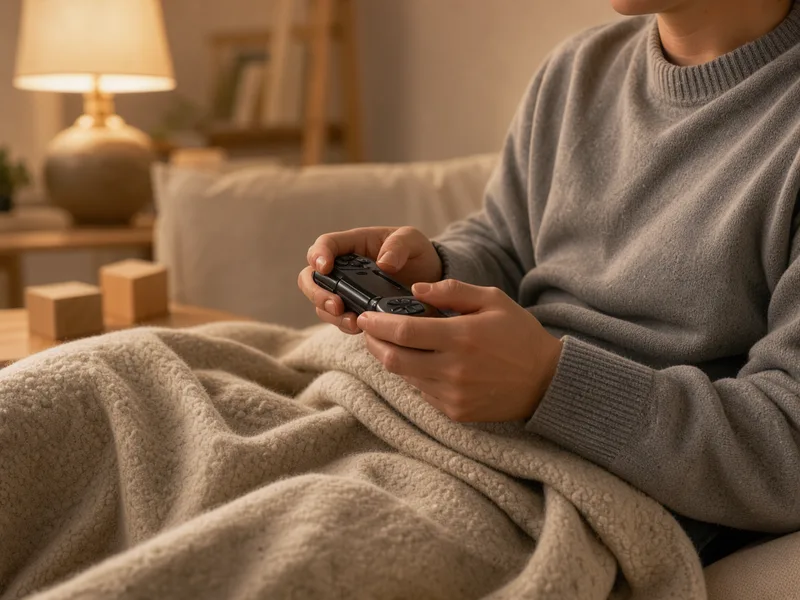
A handheld with suspend and resume removes the biggest barrier to playing in small windows: the setup cost. If you have to boot a console, load a save and find a controller, you will not play in 15 minutes. You will scroll your phone instead.
With a handheld, you press a button, the game is exactly where you left it, and you are playing within seconds. When the window closes, you press the button again and walk away. No guilt, no lost progress, no "I will just finish this one thing" that turns into an hour you did not plan for.
The suspend and resume features on Switch 2, Steam Deck, PS5 and Xbox all work differently, and some have limits worth knowing before you rely on them. But the principle is the same: the less friction between "I have ten minutes" and "I am playing," the more likely you are to actually play.
A practical starting point
Four Steps to Protect Your Play Time
Pick your window and name it
Decide which 15 to 30 minute block is yours. It might be after bedtime, during a commute or in a lunch break. Say it out loud to yourself so it stops being a vague wish and becomes a real appointment.
Choose a game that fits that window
Not the game you want to play someday. The game that works in 15 minutes, saves anywhere and pauses instantly. If you are not sure whether a game fits, check how its saving and pausing work before you buy it.
Keep the game ready
Suspend it, not quit it. Keep it on your home screen or in your pocket. The goal is zero setup time when your window opens. If you have to search for it, you will not play it.
Stop when the window closes
This is the hardest part and the most important. When your time is up, stop. The game will be there tomorrow. Stopping cleanly builds trust with your family and with yourself, and it keeps gaming from becoming the thing you resent.
Pick Your Genre Before You Pick Your Game
Most people choose a game by what sounds fun, then discover it does not fit their schedule. A better approach is to start with the genre and let that narrow the field.
Turn-based games, card games and puzzle games are forgiving of interruptions. You can stop between turns or between rounds without losing anything. Action games vary widely: some let you pause instantly, others punish you for stopping. Narrative games like visual novels and walking simulators often save at natural chapter breaks, which makes them easy to pick up and put down.
The save anywhere vs checkpoints distinction matters here. A game that only saves at checkpoints can waste your whole window if the checkpoint is 20 minutes away. A game that saves anywhere lets you use every minute you have.
Common Questions About Finding Time to Game
Is 15 minutes of gaming actually worth it?
Yes, if the game is designed for it. A 15-minute session in a game that saves anywhere and pauses instantly can clear a level, finish a puzzle or advance a story. Over a week, four 15-minute sessions add up to an hour of real progress. The feeling of progress is what keeps you coming back, and that matters more than the total hours.
Should I game instead of sleeping?
No. This is the one trade-off that reliably backfires. A tired brain does not enjoy games the way a rested brain does, and the next day suffers. If your only window is the time you would otherwise sleep, the honest answer is that you need to find a different window or accept a smaller one. Protecting sleep is not a compromise; it is the baseline.
What if my partner thinks gaming is a waste of time?
That is a conversation, not a problem to solve with a productivity hack. The most effective approach is a short, honest one: tell them what you need, when you need it and what you are giving up to make room for it. A specific ask like "I would like 30 minutes after the kids are in bed, three nights a week" lands better than a vague "I need more free time." If they push back, ask what they would need in return and find a trade that works for both of you.
Do I need a handheld, or can I make it work on a TV?
A handheld is not required, but it removes friction. If your only option is a TV in a shared room, you will play less because the setup and the social context get in the way. A handheld lets you play in bed, on the couch while someone else watches TV, or on a commute. If you cannot get a handheld, a laptop or a tablet with a controller can do the same job.
How do I stop feeling guilty about gaming?
Guilt usually comes from one of two places: you are taking time from something you feel you should be doing, or you are not telling anyone what you are doing. The fix for the first is to be honest about whether the time is truly yours. The fix for the second is to say it out loud. "I am going to play for 30 minutes" is a complete sentence. You do not owe a justification beyond that.
The Conversation With Your Partner
This is the part most gaming guides skip, and it is the part that matters most. If you are a parent or a partner in a shared household, your gaming time is not just your time. It is time that someone else is covering for you, or time that someone else expected to share with you.
You do not need permission. You do need a shared understanding. A short, specific conversation works better than a long one. Something like: "I want to game for 30 minutes after the kids are in bed, three nights a week. I will handle the morning on those days." That is concrete, it is fair and it gives your partner something to hold you to.
If your partner is also a gamer, the conversation is easier but still worth having. Two people who both want 30 minutes need to decide whose 30 minutes come first, or whether you take turns. The worst outcome is both of you playing at the same time and the house falling apart around you.